Public Safety & Courts
Hamtramck Councilman Convicted of Election Falsehood Awaits Sentencing
By Staff · July 17, 2026
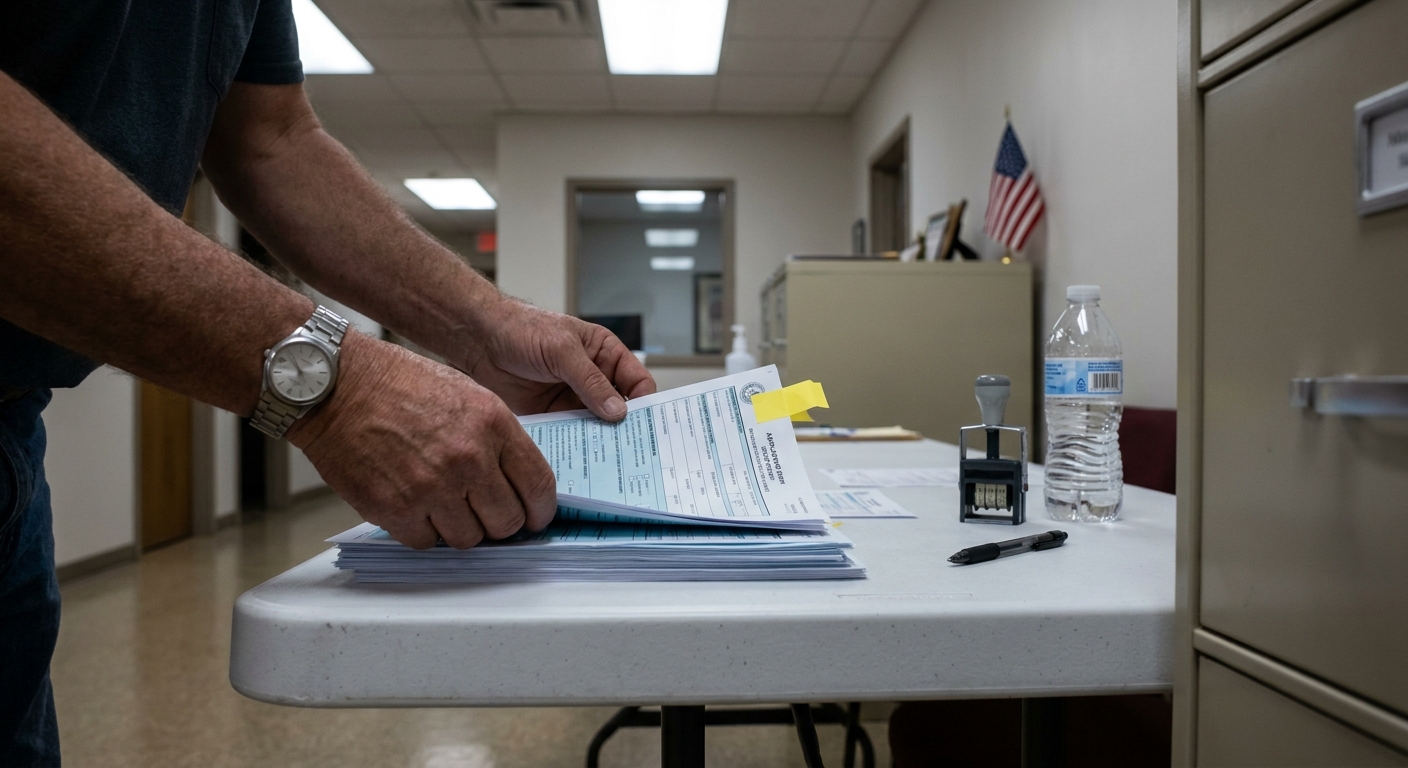
Hamtramck City Council member Mohammed Hassan is awaiting an Aug. 7 sentencing before Wayne County Circuit Court Judge Michael Hathaway after a jury convicted him of providing a false statement on an absentee ballot application. The same jury acquitted Hassan of two felony charges — election law forgery and forging a signature on an absentee ballot application.
Hassan was charged in August 2025 after a special prosecutor's investigation into allegations that he and others attempted to submit absentee ballots on behalf of newly naturalized citizens in the 2023 election. The case centered on an absentee ballot application allegedly filed in the name of Hamtramck resident Zerin Sultana. The trial lasted three days, with testimony from six witnesses, before jurors began deliberations on July 1, 2026.
Hassan claimed he assisted Sultana in filing the application, but Sultana testified she never asked for a ballot, never signed the form, and does not vote. "I did not want an absentee ballot application. I did not sign it. I do not vote," Zerin Sultana, a Hamtramck resident, testified. A Michigan State Police handwriting analysis confirmed that the signature on the application was not Sultana's.
"Michigan's election laws will be taken seriously and prosecuted when supported by the evidence," Jeffery A. Yorkey, special prosecutor and Monroe County prosecutor, said.
Scott Ruark, Hassan's defense attorney, argued that Sultana's memory was unreliable and the prosecution failed to prove its case beyond a reasonable doubt.
In Michigan, making a false statement in an absent voter ballot application is a misdemeanor punishable by imprisonment for not more than 93 days or a fine of up to $500, or both, for a first offense. A misdemeanor election conviction does not automatically remove a council member from office or disqualify them from future office; automatic removal applies only to felony convictions.
In Hamtramck, the City Charter provides that the failure, neglect, or refusal by any elected official to comply with charter provisions shall be a cause for removal from office, with the City Attorney required to file a complaint before Council. If the City Attorney fails to file a removal complaint, any citizen of Hamtramck may file and prosecute the complaint on behalf of the city.
In Livonia, no direct provision in the City Charter allows the Council to remove a member for election law violations; the Livonia City Charter defers to Michigan's General Laws, stating that any elective official may be recalled from office by the electors of the City in the manner provided by the General Laws of the State.
For voters in Livonia and neighboring communities who rely on absentee ballots and trust local officials to uphold election rules, Hassan's case illustrates how misdemeanor offenses by public officials carry civic weight even when they fall short of felony misconduct. His August 7 sentencing will clarify what penalty a Wayne County judge deems appropriate for a local official convicted of falsifying an absentee ballot application — and what consequences actually follow when an officeholder can't follow the rules on his own ballot.