Community & Events
Livonia Spree Adds Fees, Curfews, and Metal Detectors Amid 'Teen Takeover' Threat
By Staff · July 25, 2026
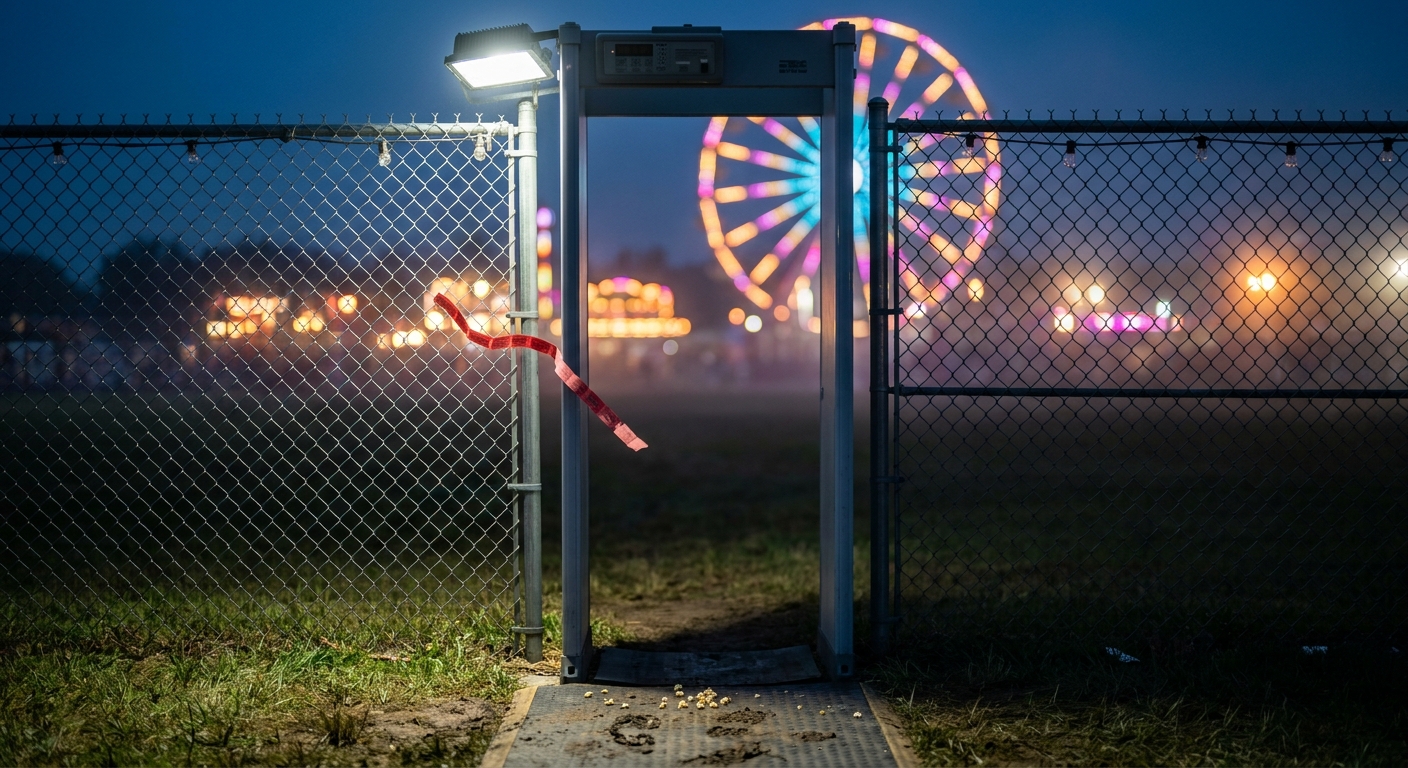
On the Spree's fireworks night, Livonia residents arrived at a city birthday celebration that no longer opened freely to everyone. After 4 p.m. Sunday, June 28, admission cost residents $5 per person, while non-residents paid $10. Children 12 and younger were admitted free.
The Sunday charge — the first in the event's history — was only one part of a broader security shift at a festival that had traditionally been free. The Spree began in 1970 as Livonia's citywide birthday celebration and became the city's official annual festival in 1973.
Admission remained free Tuesday through Saturday, but anyone 17 or younger had to be accompanied by a parent or guardian after 4 p.m. Friday, Saturday and Sunday. Teens who broke the rule were asked to leave, though no fines were issued. Metal detectors stood at entry points for the first time, and daily attendance was limited to fewer than 15,000 people.
For families who have treated the Spree as a summer tradition, the changes reshaped the practical terms of attending: what they would pay, whether teenagers could come on their own and whether there would still be room to get in.
The immediate trigger was an online "teen takeover" threat aimed at the festival. A flyer circulated on social media promoting a gathering of teens and misspelled the city's name as "Liviona Spree Takeover." Livonia police said they would not dismiss it as harmless online chatter.
"Everyone is aware of the history of the past teen takeovers, and there will be zero tolerance, and everyone should expect enforcement action, including removal from the event, citation, or arrest when appropriate," the Livonia Police Department said.
Livonia was not reacting in a vacuum. Teen takeover gatherings organized through social media had led to police warnings, curfews, metal detectors and early shutdowns at community events in Detroit, Pontiac, Livonia and Dearborn Heights during 2026. Earlier incidents in Detroit included blocked streets, the theft of a man's chain and the shooting of a 14-year-old. An attempted teen takeover targeting the Dearborn Heights Spirit Festival in July 2026 was shut down by police, leading to multiple arrests and detentions.
The city said the added security cost about $40,000 to $50,000, helping drive the decision to charge Sunday admission. Some residents objected to paying for the first time to attend what had long been a free city birthday celebration. The concern was not simply about five dollars. In practice, the city shifted part of the cost of responding to a social media threat onto the residents the festival was created to bring together.
The curfew swept in teenagers who had done nothing wrong. It meant teens could no longer attend independently during any evening hours — when rides, live entertainment and fireworks take place — regardless of their history of attending the event or their family's ties to Livonia.
Kayleigh Reid, executive director of the Livonia Spree, said the restrictions were intended to prevent the city from losing the event altogether.
"Our No. 1 priority this year is safety, because we are not going to allow this Spree to end because we didn't take all the necessary precautions," Kayleigh Reid, executive director of the Livonia Spree, said.
The 2026 Livonia Spree ran June 23 through June 28 at Ford Field, at the corner of Farmington Road and Lyndon Road in Livonia.
The feared takeover did not materialize. For residents judging the restrictions, that is the difficult balance: Livonia acted on a threat circulated online and a troubling regional record, but the event itself did not produce the crisis officials were trying to prevent.
The city kept the Spree open, but changed the terms on which residents could take part: paid entry on its busiest night, adult supervision for teenagers, metal-detector screening and capped attendance. For Livonia residents, the question is whether those measures protected the commons or began to erode it — and whether a city's birthday celebration can remain a genuinely public event when access is gated by fees, age restrictions and surveillance.